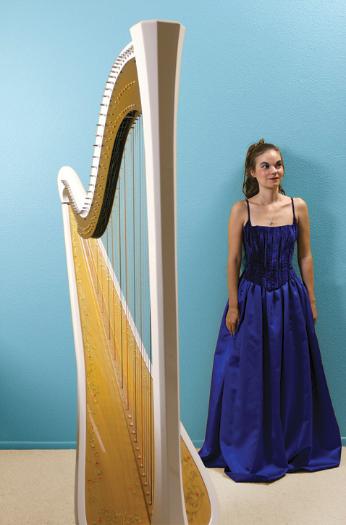
| "Dr. Vanessa Sheldon is the consummate performer and teacher. She’s expressive and precise in her performances, and patient in her role as teacher." Ken Glaser, producer and videographer. When most people think of the harp, it is the instrument of the angels that comes to mind. A delicate, beautiful instrument of an ethereal world. But the harp is an instrument of endless possibilities. Have you ever heard ragtime, Harlem Nocturne, or The Pink Panther performed on the harp? The concert harp is considered the world's most difficult instrument to play. With 47 strings and 7 pedals, each of which has three positions, the odds of playing a wrong note are insurmountably higher than playing the right one. But this is the magic of the harp: to make it all look easy, and to hide the pedals with a long, flowing skirt! Dr. Sheldon specializes in composing and transcribing virtuosic as well as non-traditional music for harp in addition to premiering new works for her instrument. With a repertoire well-versed in Classical masterpieces, Dr. Sheldon's mastery of harp technique and artistic vision allows her to perform a variety of music spanning Celtic, Latin, pop, jazz, and rock genres. Enjoying the challenge of reinventing music for harp, her interpretations encompass piano favorites from Beethoven to Liszt to Scott Joplin, such diverse artists as Frank Sinatra, The Beatles, and Adele, jazz standards including Take Five and In the Mood, show tunes, ragtime, and even legendary rock anthems such as Stairway to Heaven. Always mindful of her clients' preferences, with four harps to chose from, Dr. Sheldon can customize the look and sound of her harp performance to suit any event, from providing heavenly background music to being a show-stopping entertainer. |
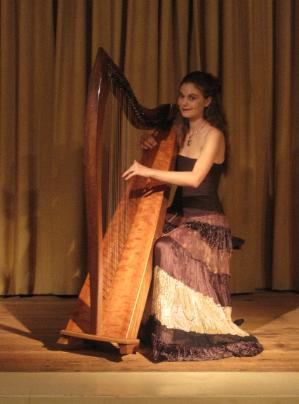
| "In addition to the concert harp, I play the Celtic harp as well as the clarsach. The Celtic harp, pictured to your right, is obviously a much smaller instrument, but the main difference is that there are no pedals, so pitch changes are controlled by levers across the harp's neck. This means that more chromatic repertoire is much more difficult, or impossible to play. This instrument is perfect for light Classical and popular music with the same volume capacity as the concert harp |
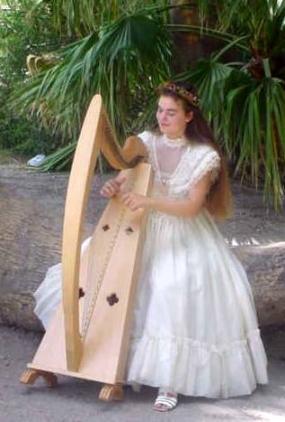
| The word "clarsach" is a Gaelic term for the ancient Celtic harp, which, although looking very similar to a modern Celtic harp, is extremely different in the fact that the strings as made of wire, traditionally bronze or steel. To play this harp requires dampening certain strings after they are played, so as to keep a clear tone quality. Most of the music I play on this quieter instrument is traditional Celtic music, although holiday carols sound particularly beautiful as well. When I perform on this harp, many people remark that it sounds like bells, or even a dulcimer. |
 | |  | |  | |  | |  | |  |